The World Beneath and Beyond the Wave
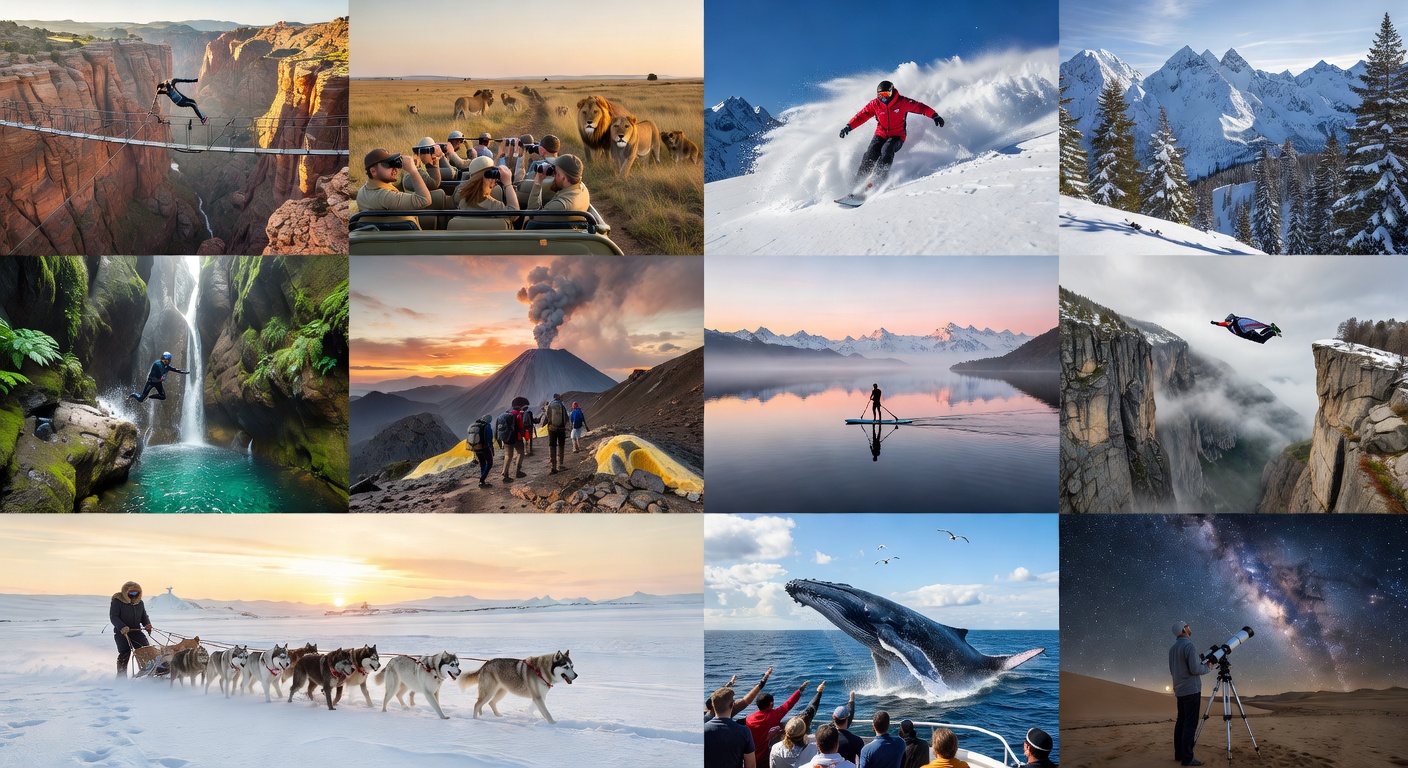
Water covers 71% of our planet's surface and contains an estimated 80% of all life on Earth. Yet most of us interact with it only at its surface — at the shore, on a beach, perhaps on a leisurely boat. For the adventure traveller, this leaves an almost incomprehensibly vast frontier largely unexplored. The world beneath the water, and the world upon its wildest surfaces, contains some of the most extraordinary experiences available to a human being.
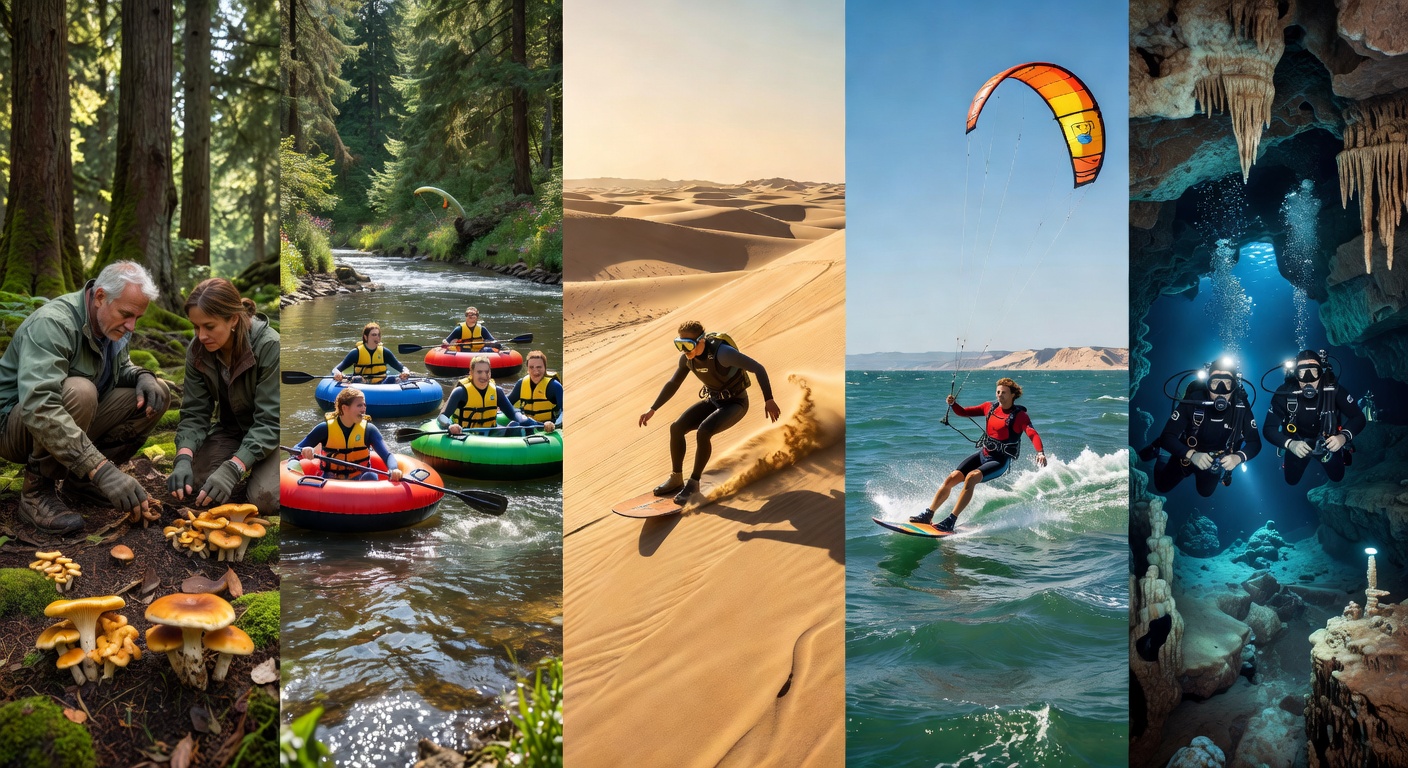
This article explores five distinct water adventures across the globe — from the silent, fluorescent world beneath the Great Barrier Reef to the thundering chaos of Amazon whitewater, from the ghostly beauty of cenote cave diving to the pure kinetic joy of ocean kite surfing. Each offers something different; each offers something irreplaceable.
Scuba Diving: The Great Barrier Reef
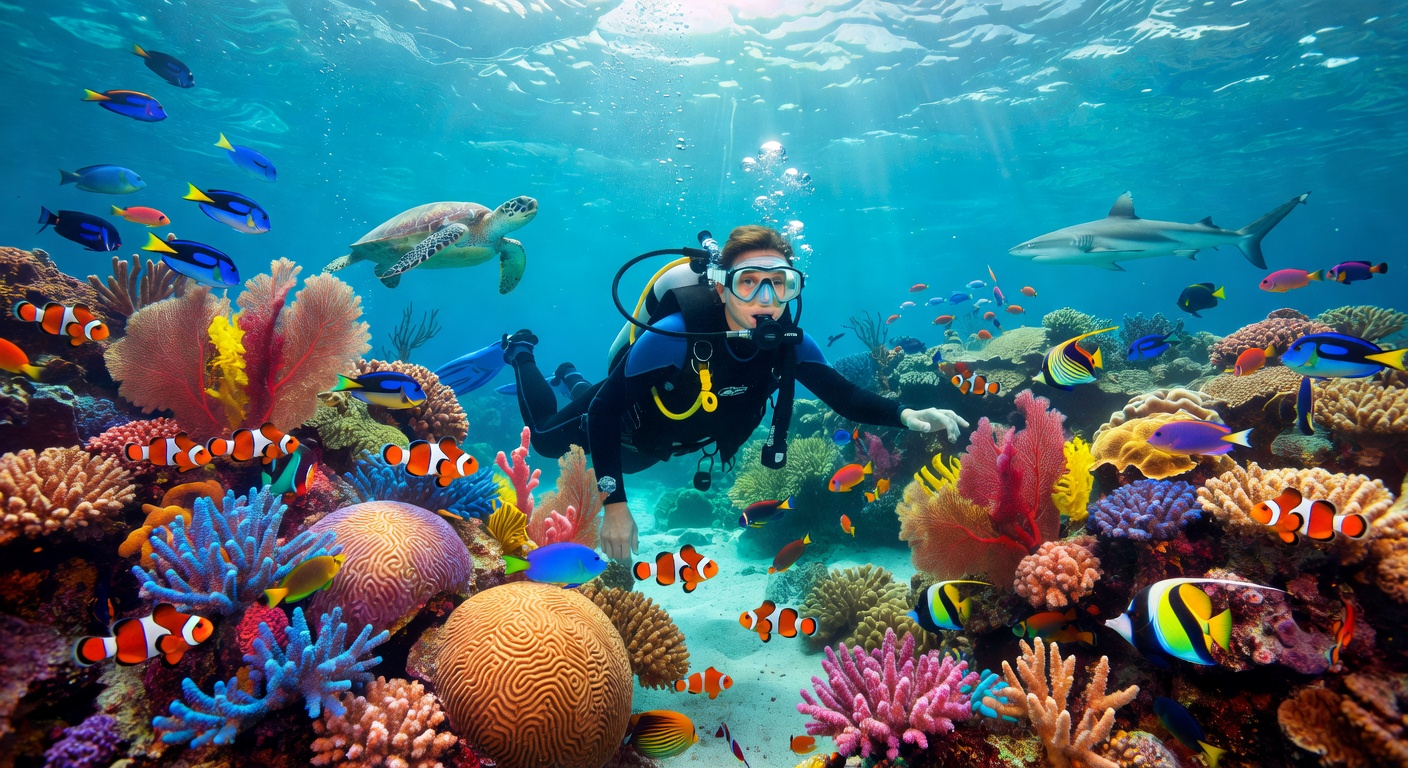
The Great Barrier Reef extends over 2,300 kilometres along Australia's northeast coast — the largest living structure on Earth, visible from space. Beneath its surface lies a world of staggering complexity: 1,500 species of fish, 4,000 types of mollusc, 240 species of birds visiting its 900 islands, and coral formations that have been growing for thousands of years. To dive here is to enter a living museum of evolutionary achievement.
Entry-level Open Water certification takes 3–4 days and opens a world of dives to depths of 18 metres. For the serious diver, Advanced Open Water and Rescue Diver certifications unlock deeper, more technical sites. The Coral Sea — just beyond the outer reef — features vertical walls dropping hundreds of metres into an abyss where reef sharks, mantas, and hammerheads patrol the blue.
Climate change has bleached significant portions of the reef, and visiting now carries an urgency — a responsibility to witness, to care, and to advocate. Many dive operators in Cairns and Port Douglas partner with marine research programmes; diving with them contributes directly to reef monitoring and restoration efforts. Choose your operator carefully.
Best Time to Dive
June–October: clearest visibility, calm seas, mild temperatures. Avoid November–April (cyclone season, jellyfish influx).
Certification Required
PADI Open Water minimum. Advanced recommended for outer reef and Coral Sea dives.
Water Temperature
22–29°C year-round. 3mm wetsuit in winter months; skin suit or 1.5mm shorty in summer.
Base Yourself In
Cairns or Port Douglas for day trips; Townsville for Yongala wreck diving (among the world's best).
Cave Diving: Yucatán Cenotes
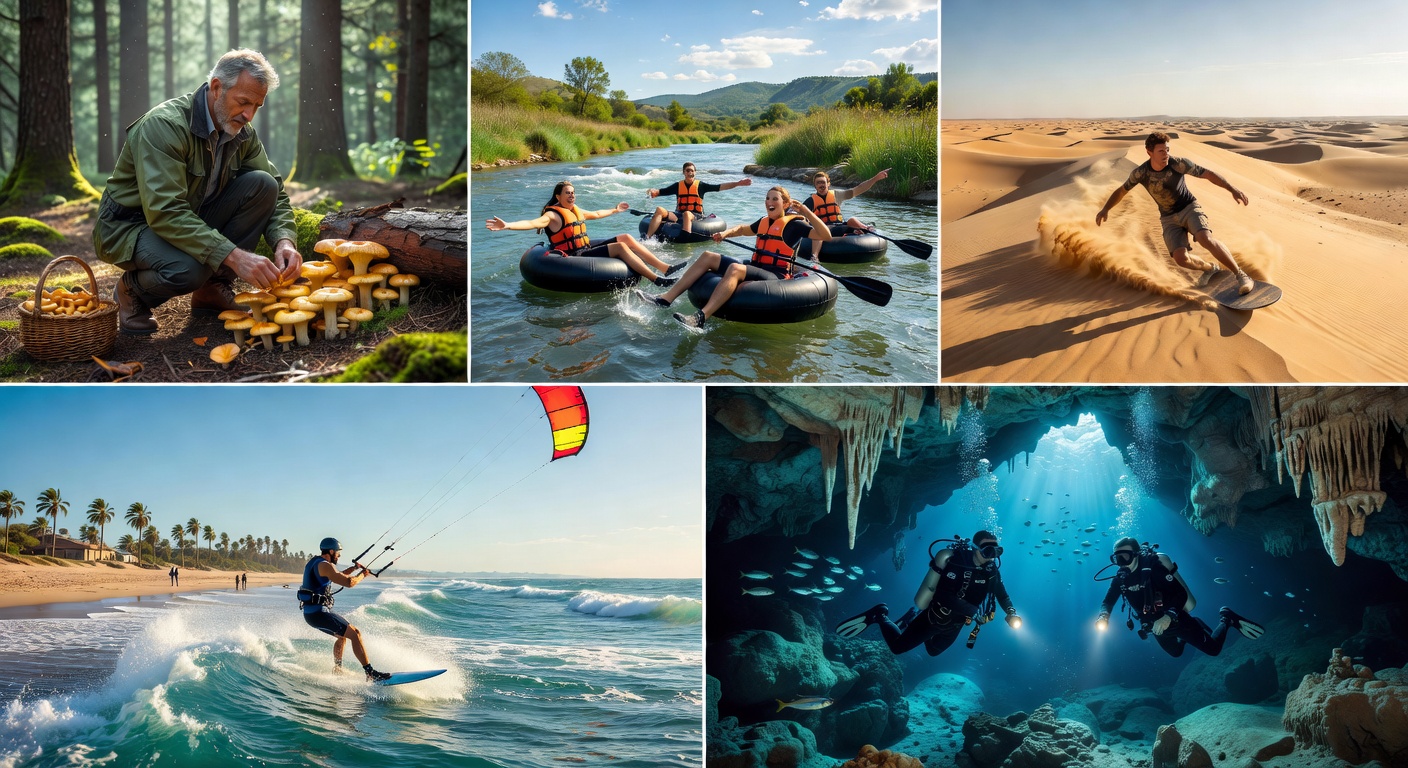
The Yucatán Peninsula of Mexico conceals one of the world's great secrets beneath its limestone surface: an interconnected system of flooded caves — cenotes — stretching for thousands of kilometres. The Sistema Sac Actun, now confirmed at over 376 kilometres of mapped passages, is the world's largest known flooded cave system. To dive in it is to travel through geological time in chambers of unearthly beauty.
The water in the cenotes is extraordinarily clear — filtered through limestone for thousands of years, it achieves a visibility that makes standard ocean diving feel opaque by comparison. Light enters through natural skylights in the cave ceiling, creating shafts of illumination that illuminate the halocline — the mixing zone between freshwater above and saltwater below — in shimmering, miragelike curtains.
Cave diving is the most technical branch of recreational diving, and carries the industry's most rigorous certification requirements. Cavern diving (near the entrance, with natural light visible) is accessible to Open Water divers with a brief briefing. Cave diving proper requires dedicated multi-day cave diver certification. Do not exceed your training here — cave diving fatalities almost universally involve divers exceeding their certification level.
"Floating through a cenote at 15 metres, watching golden light filter through the halocline while a catfish navigates the darkness ahead of you — there is nothing else in the world quite like it. The earth itself is speaking."
— Selene Okonkwo, Sistema Sac Actun, Tulum
Whale Watching: Swimming with Giants
To see a humpback whale breach is to understand, viscerally and immediately, what the word "magnificent" actually means. A 40-tonne animal propelling itself entirely out of the water — spinning, crashing back in a explosion of white water — is a spectacle that rewires something in the human brain. You don't just see it. You feel it in your sternum.
The world's premier whale watching destinations trace the great migration routes. The Silver Bank in the Dominican Republic offers the planet's only legally permitted in-water humpback encounters during their winter breeding season — January to March. Guides accompany small groups of snorkellers to float passively while whales approach voluntarily. In Azores, Portugal, sperm whales are residents year-round; blue whales — the largest animals ever to exist on Earth — pass through in late spring.
Responsible whale watching demands operator vetting. Look for adherence to whale-watching guidelines, no engine approaches within exclusion zones, and operators who contribute to cetacean research databases. The difference between a responsible wildlife encounter and harassment is entirely in the operator's conduct.
Kite Surfing: Harnessing the Wind
Kite surfing — kiteboarding — combines the power of a large controllable kite with a small board to produce a sensation that its practitioners describe as the closest thing to flying available without leaving the planet's surface. When the conditions align — a steady 15–25 knot wind, warm water, a long sandy beach — the kite surfer can accelerate to 40+ km/h, launch into the air for 10–20 metres, and hang suspended for seconds at a time before landing and accelerating again.
The world's kite surfing meccas are defined by reliable wind: Cabarete in the Dominican Republic, Tarifa at Spain's southern tip (where Atlantic meets Mediterranean wind funnels through the Strait of Gibraltar), Dakhla in Morocco, and the Outer Banks of North Carolina. Each has developed a culture of schools, gear rental, and community around the sport.
Learning to kite surf takes genuine commitment — a typical beginner's course runs 12–15 hours over 4–5 days before independent riding becomes possible. The kite is a powerful tool; proper instruction is non-negotiable. Once proficient, however, kite surfing opens doors to some of the most spectacular locations on Earth — remote lagoons, deserted coastlines, and downwind crossings that would be inaccessible any other way.
Amazon River Rafting
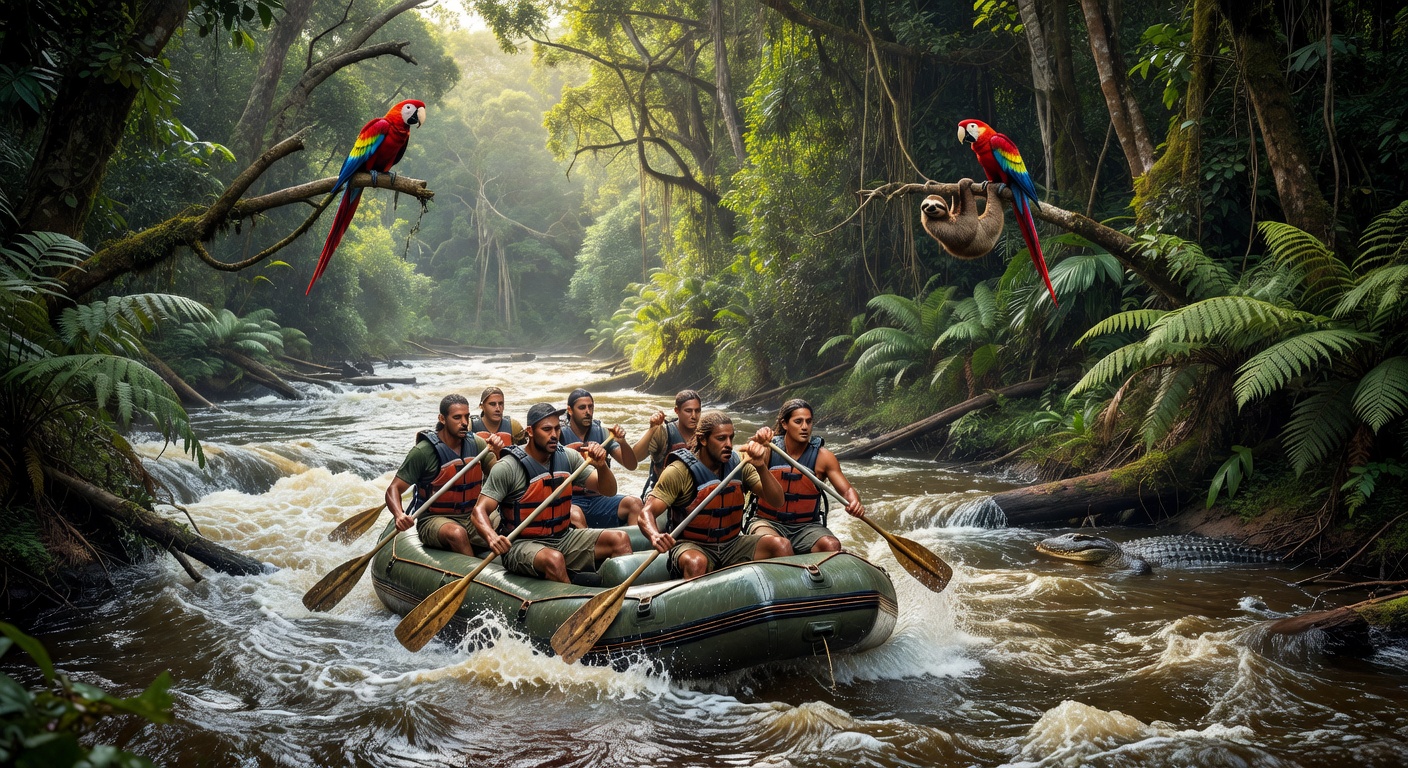
The Amazon carries approximately 20% of the world's fresh water — more than the next seven largest rivers combined. At flood stage, it spreads across an area larger than England. To raft sections of the Amazon and its tributaries is to enter the largest river ecosystem on Earth: a world of pink river dolphins, black caimans, anacondas, piranhas, and the almost incomprehensible biomass of the flooded forest.
True whitewater rafting occurs on Amazon tributaries rather than the main river, whose flow is mighty but largely smooth. The Río Apurímac in Peru — considered the true source of the Amazon — offers Class IV and V rapids through spectacular canyon country. The Río Pastaza in Ecuador runs through both Andean mountains and upper Amazon jungle. Both require experienced commercial operators and proper safety equipment.
For those less focused on whitewater, multi-day Amazon river journeys by traditional wooden boat — stopping at riverside communities, camping on beaches, exploring flooded forests by canoe — offer a different and equally profound encounter with the world's greatest river. The soundscape alone — at dawn, as the jungle awakens — is worth the entire journey.
3 Comments
The section on cenote diving is perfect. I did my cave diver certification in Tulum last year and the halocline is genuinely one of the most surreal things I've ever seen underwater. You described it exactly right — "shimmering, miragelike curtains" — that's precisely it. Adding the Silver Bank whale experience to my list immediately.
I kite surf in Tarifa regularly and you've captured the magic of it perfectly. The Strait of Gibraltar wind is unlike anywhere else — consistent, powerful, completely reliable. The section on learning is also honest and important; so many people underestimate what the kite can do. Great piece.
Spent 10 days on a wooden boat on the Rio Negro in 2024 and the dawn soundscape you mention is absolutely real. The jungle waking up at 5am is an experience I think about every single day. Thank you for including the Amazon in this — it's criminally underrated as an adventure destination.