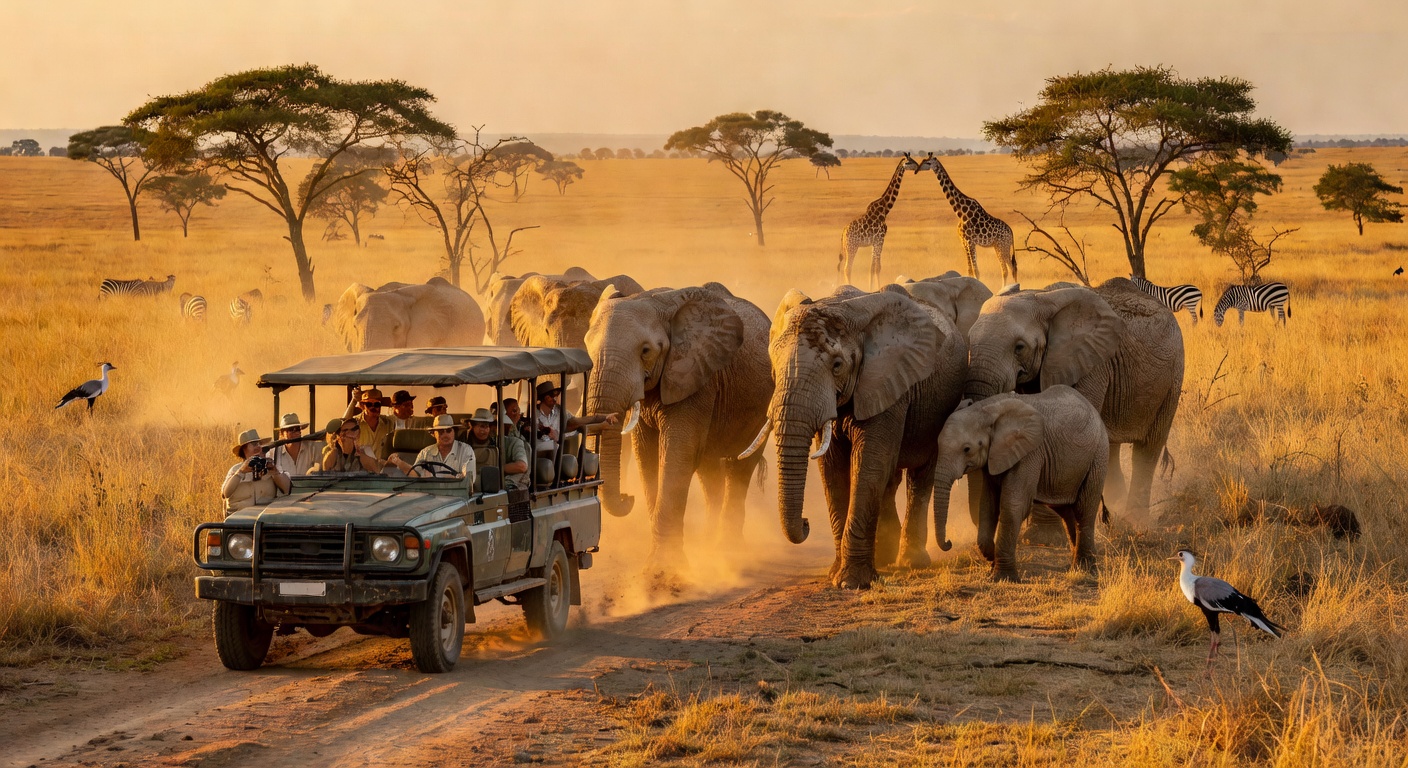
Africa: The Last Great Wildlife Theatre
There is no wildlife experience on Earth that compares to an African safari. Not because other continents lack extraordinary fauna — they don't — but because Africa retains something that has largely vanished elsewhere: vast, intact ecosystems where predator-prey relationships play out over millions of square kilometres, where the evolutionary drama that shaped all life on this planet continues uninterrupted. To witness it is not tourism. It is a confrontation with the deep nature of existence.
I have been on safari fourteen times across seven African countries. Each time, I encounter something I have never seen before — a behaviour, a moment, a quality of light that no amount of preparation could have predicted. Africa continually surprises. That is its greatest gift and the reason I keep returning.
This guide covers four distinct safari and wildlife experiences, from the iconic savanna theatres of Kenya to the remote waterways of the Okavango Delta, the horseback routes of the Drakensberg, and the extraordinary dark skies of the Namib Desert.
The Masai Mara: Kenya's Wildlife Capital
The Masai Mara National Reserve in southwest Kenya is perhaps the world's most famous wildlife destination — and it has earned every superlative attached to it. Covering 1,510 square kilometres of open savanna, riverine forest, and rolling grassland, the Mara is home to the highest density of lions in Africa, resident cheetahs and leopards, enormous elephant herds, and the full complement of Africa's iconic megafauna.
The Great Migration — the annual movement of 1.5 million wildebeest, 200,000 zebras, and 300,000 Thomson's gazelles between Tanzania's Serengeti and the Kenyan Mara — is the largest wildlife movement on Earth. The Mara River crossings, typically occurring between July and October, are the migration's dramatic centrepiece: thousands of wildebeest plunging into crocodile-filled water in a chaos of noise, dust, and survival instinct that is almost too intense to watch.
Beyond the Migration, the Mara delivers extraordinary wildlife viewing year-round. Dawn game drives in the golden hour light — the Mara light is famous among wildlife photographers — consistently yield lion kills, cheetah sprints, elephant family dynamics, and intimate predator encounters that feel both wild and completely real. This is not a zoo with wide-open enclosures. This is the actual world, doing what it has always done.
Safari Planning Tips: Masai Mara
- Book at least 6 months ahead for Migration season (July–October) — lodges fill quickly
- Choose a camp outside the reserve boundary for better value and fewer vehicles
- Private conservancy camps (Olare Motorogi, Naboisho) offer walking safaris and night drives
- Budget $400–$800 per person per night for quality all-inclusive camps
- Hire a knowledgeable local guide — their knowledge makes the difference between seeing animals and understanding them
The Okavango Delta: Africa's Living Jewel
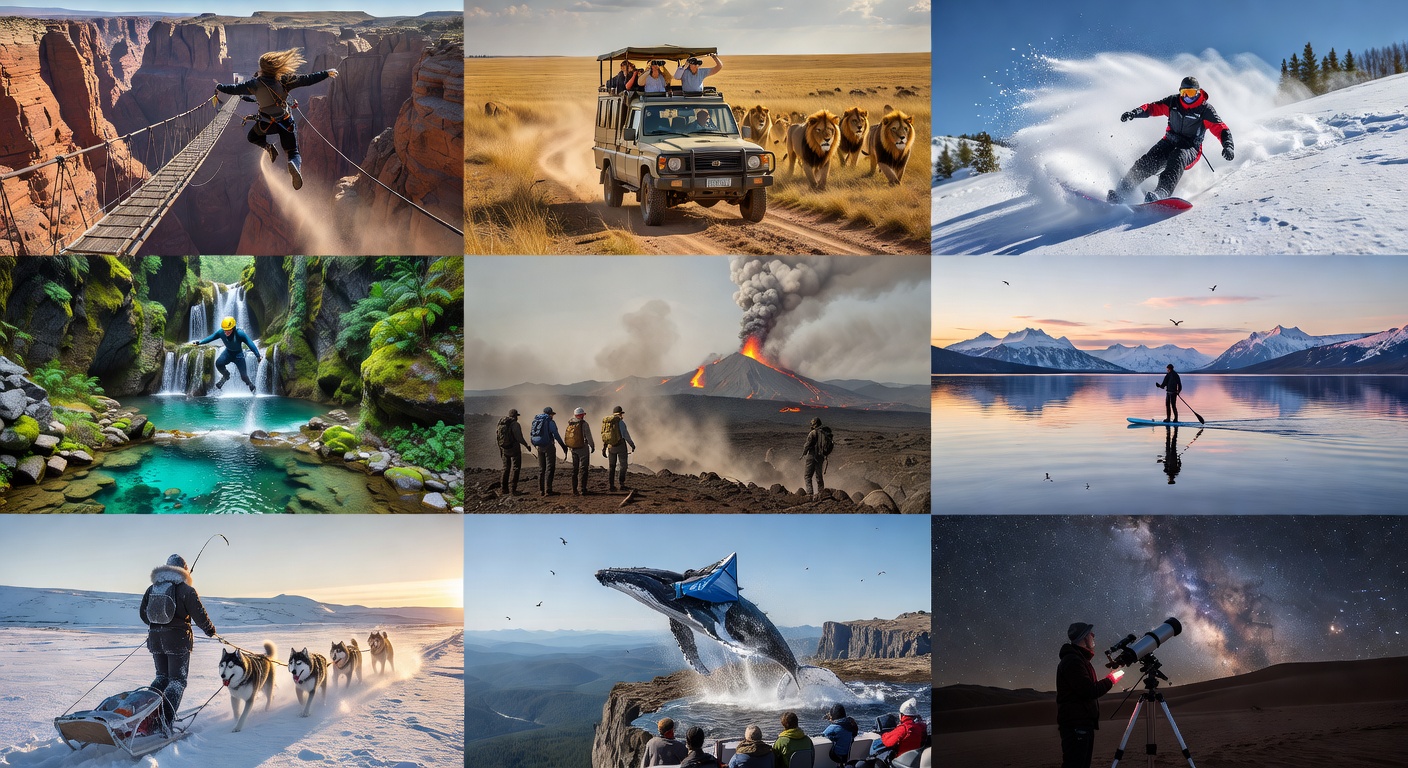
The Okavango River flows from the Angolan highlands across Botswana's Kalahari Desert — and then does something extraordinary. Rather than reaching the sea, it fans out across flat desert terrain into a vast inland delta: 15,000 square kilometres of islands, channels, lagoons, and floodplains that shift with the seasons and support a wildlife density that rivals the Mara.
The Okavango Delta is UNESCO World Heritage-listed and subject to some of Africa's most progressive conservation legislation. Botswana has committed to a low-volume, high-value tourism model — fewer visitors, higher prices, dramatically lower impact. The result is an experience of startling intimacy: mokoro canoe trips through papyrus channels with hippos surfacing metres away, walking safaris through mopane woodland following elephant tracks, and night skies of absolute purity.
African wild dogs — among the continent's most endangered predators — maintain healthy populations in the Delta and surrounding areas. To watch a pack of 20 wild dogs hunting, coordinating with a sophistication that approaches language, is an experience that reorients your understanding of what animal intelligence means. The Okavango has given me moments I will carry for the rest of my life.
"A lion looked directly at me from three metres away — not aggressively, not curiously, but with a total, absolute indifference that was somehow more affecting than any display of power could have been. I was irrelevant. The world continued without my approval."
— Nadia Kimani, Okavango Delta, Botswana
Horseback Safari: The Drakensberg
South Africa's Drakensberg — "Dragon's Mountain" in Afrikaans — is a 1,000-kilometre escarpment that forms the backbone of southern Africa, rising to peaks above 3,400 metres. Its eastern face drops in dramatic basalt cliffs and rolling green foothills into KwaZulu-Natal province. Its San rock art, painted in ochre, white, and black by the region's first inhabitants over thousands of years, decorates caves and overhangs throughout the range.
Horseback safaris through the Drakensberg foothills offer access to terrain and encounters impossible from a vehicle. On horseback, you can approach plains game — eland, blesbok, grey rhebok — without triggering their flight response. You move at the speed of the landscape. You notice things you would miss from a car: a secretary bird stalking through long grass, the precise angle of light on the escarpment at 4pm, the extraordinary silence of high-altitude grassland.
Several operators offer multi-day trails camping in the mountains, crossing high passes and descending into secluded valleys. These trips combine wildlife observation, landscape immersion, and the physical joy of horsemanship into an experience that is simultaneously more demanding and more rewarding than conventional safari.
Desert Stargazing: The Namib
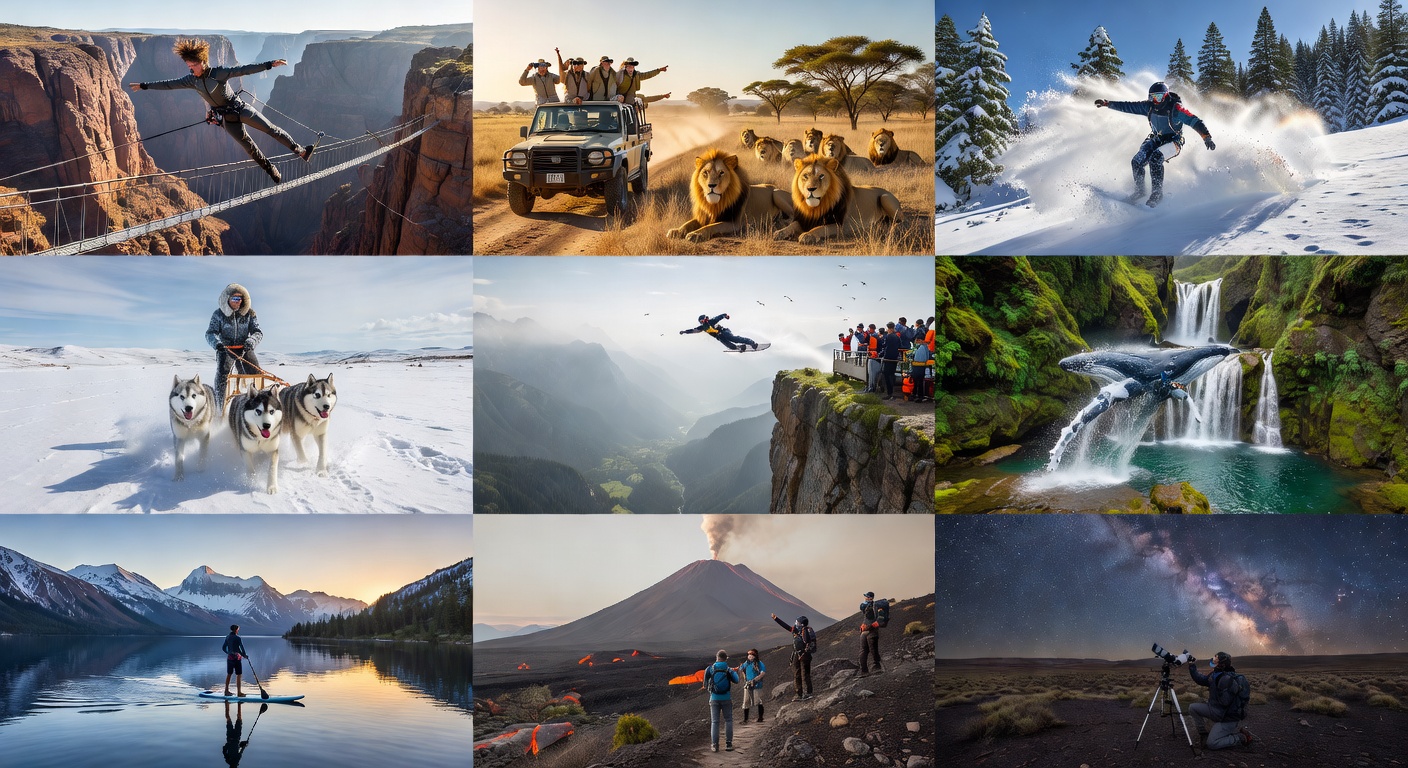
The Namib Desert is the world's oldest desert — 55–80 million years old — and one of its driest. Its coastal fog, driven by the Benguela Current, supports a unique ecosystem of fog-basking beetles, welwitschia plants that may live 2,000 years, and adapted black rhinos. Its dunes at Sossusvlei — Dune 45, Big Daddy, the iconic red sand of Deadvlei — are among the most photographed landscapes on Earth.
But what the Namib offers at night surpasses even its famous dawn dunes. The Namib-Naukluft Park has near-zero light pollution. Its skies are certified among the darkest on Earth. When the Milky Way rises over the dunes on a moonless night, arching from horizon to horizon in a river of light so dense it casts shadows, the effect is not merely beautiful. It is transformative. People weep. It is entirely appropriate.
Organised stargazing experiences at camps like Sossusvlei Desert Lodge and Kulala Desert Lodge combine telescopes, expert guides, and sunset-to-star timing to create an evening that ranks among Africa's most memorable encounters. And unlike any other wildlife experience on this continent, this one is guaranteed — the sky will always show up.
3 Comments
The Okavango section is beautiful. We spent five days at a fly-in camp in the NG32 concession last year and the wild dog hunt you describe is exactly what we witnessed — they moved with a coordination that was almost supernatural. This article captures perfectly why Botswana's low-volume approach is the right one.
As a Kenyan, it's always gratifying to see the Mara represented with the depth it deserves. Your point about private conservancy camps is spot-on — the experience in Naboisho versus inside the main reserve is night and day. Fewer vehicles, walking safaris, and guides who actually know the individual animals. Worth every extra shilling.
The Namib stargazing description made me book a trip. I've been to Africa three times but only ever during daylight hours — the idea of lying under Milky Way that casts shadows had never occurred to me as a possibility. Thank you for this. Sometimes travel writing actually changes your plans.